Thus magmas DO NOT COME FROM THE MOLTEN OUTER CORE OF THE EARTH. Volcanic eruptions of these types of magma can be highly explosive due in large part to the high gas content and can rip solids from the sides of the volcano.
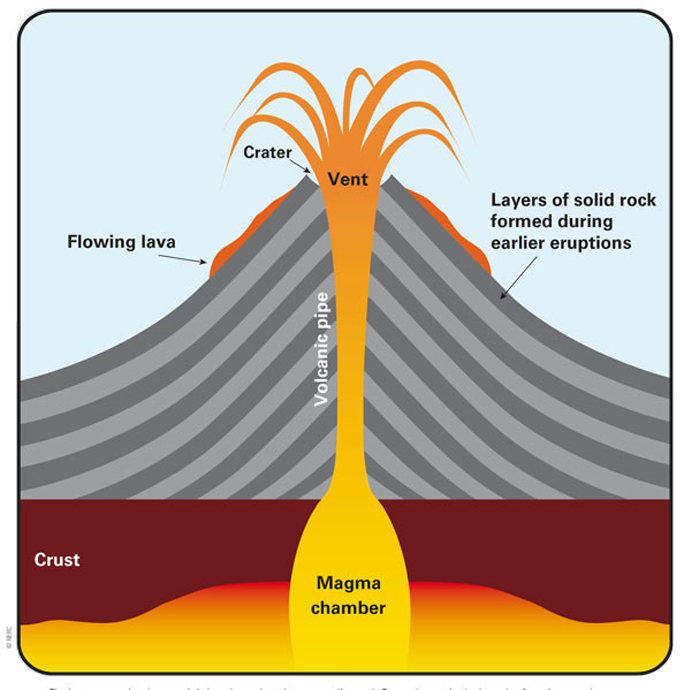
Types Of Volcano British Geological Survey
On the over-riding plate.

Where is magma not likely to form. I hope this helps. Chains of volcanic islands often form. Where a new plate boundary is likely to form in the near future d.
A volcano is formed of hot molten rock magma ash and other hot debris flow to the surface crust from the mantle. Magma is not likely to form on the Earths surface. When once oceanic plate subducts under another oceanic plate.
The attached image shows the likely zones of melting of mantle rock. Less dense than rock and is under pressure from the density different. Magma tends to rise to the surfaces because it.
The least-dense magma rises to the top. Felsic magma tends to form when seawater and the earths crust meet causing the crust to melt. The approximate depth inside the Earth where the hotspot magma originates.
Home Science Math History Literature Technology Health Law Business All Topics Random Unanswered Leaderboard Related. Lava flows which are the hot magma that comes to the surface are possible because the interior of the earth is dynamic. If the magma has a low viscosity ie its runny which is likely if it is mafic the crystals that form early such as olivine Figure 314a may slowly settle toward the.
Over millions of years many magma chambers simply cool to form a pluton or large igneous intrusion. When these magmas cool they form felsic igneous rocks including pumice ryolite and granite. As we have seen the only part of the earth that is liquid is the outer core.
On Earth hotspot volcanoes tend not to grow very large because. The magma also has a lot of unstable gases and melted rock and it can form very large calderas which are depressions or craters found on larger volcanoes. The earths interior is made of several tectonic plates that always move in relation to each other.
How Magmas Form in the Earth. Hotspots do not produce much magma c. Magmas derived from the mantle have higher levels of iron magnesium and calcium but they are still likely to be dominated by oxygen and silicon.
There Ive synthesized 100 years of geologic studies of magma formation into 4 short paragraphs. The densest magma sinks near the bottom of the chamber. The outer core is mostly Iron but magmas are silicate liquids.
Magma is below the ground and has more trapped gasses. Its magnesium calcium and iron contents are low but it is high in both sodium and potassium. The lava they produce is very dense b.
If a magma chamber encounter s an enormous amount of pressure however it may fracture the rock around it. The composition of magma depends on the rock it was formed from by melting and the conditions of that melting. Lava is the same except for gasses and on the surface.
Both magmas are extremely volatile. But the core is not likely to be the source of magmas because it does not have the right chemical composition. Most magma is trapped in the crust but some erupts onto the Earths surface as lava.
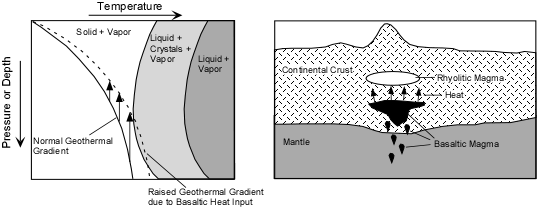
Volcanoes Magma And Volcanic Eruptions
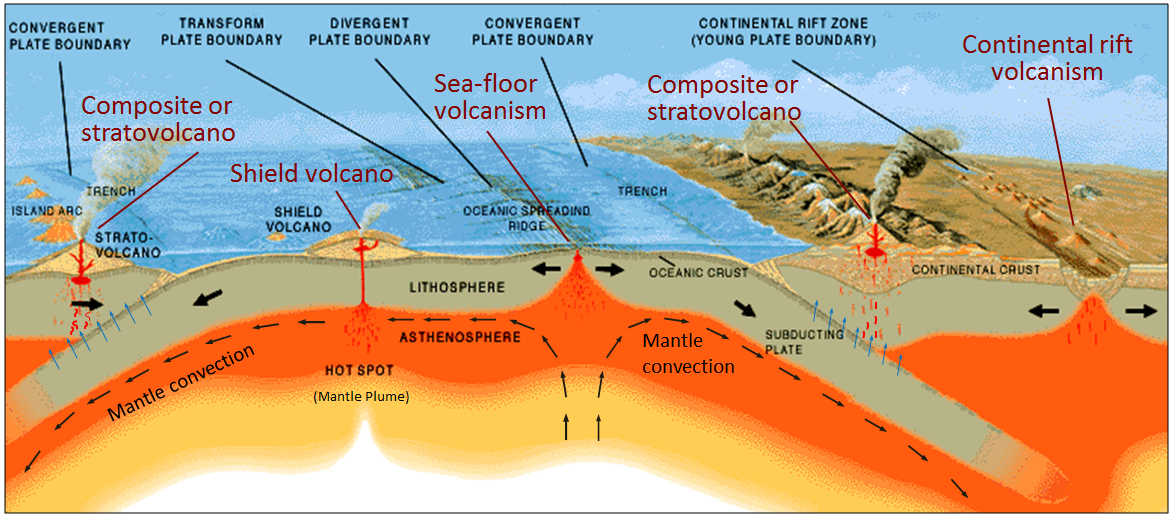
4 1 Plate Tectonics And Volcanism Physical Geology